
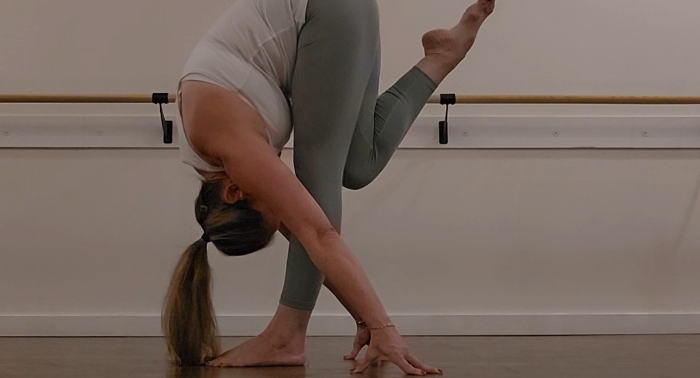
When people hear the word yoga, they often picture one of two extremes. Some imagine someone sitting quietly in meditation, eyes closed, detached from the outside world. Others picture physically demanding postures performed with remarkable flexibility and strength.
Both images capture part of the practice, but neither tells the whole story.
Yoga is neither solely meditation nor merely physical exercise. It is the harmonious integration of body, breath, and mind. It is a practice that invites us to cultivate strength without losing softness, stillness without becoming stagnant, and awareness through every movement and every breath.
The word yoga originates from the Sanskrit root yuj, meaning to unite,to join, or to yoke. At its essence, yoga is about connection. It is the union of breath with movement, body with mind, effort with ease, discipline with compassion, and our outer experience with our inner awareness. Rather than treating ourselves as separate parts, yoga gently reminds us that we are most whole when every aspect of our being works together in harmony.
Some believe yoga should be purely spiritual, while others reduce it to little more than stretching or exercise. Both perspectives overlook the profound purpose of asana, the physical practice.
Every posture is designed to prepare the body to become stronger, more stable, more mobile, and more resilient. As the body becomes healthier and more balanced, it demands less of our attention, allowing the mind to become quieter and more present.
Through consistent practice, we cultivate strength, mobility, balance, coordination, and resilience while developing a deeper awareness of our breath and nervous system. These are not simply physical achievements. They become the foundation upon which a calmer, more conscious life is built.
Every posture also becomes an opportunity for self-inquiry.
How do we respond when discomfort appears? Do we resist? Do we force? Or do we soften, breathe, and remain present?
The mat becomes more than a place to exercise. It becomes a place to understand ourselves.
One of the most common frustrations people express is, "I can't meditate." More often than not, the obstacle isn't the mind alone. A restless body, accumulated tension, and an overstimulated nervous system make stillness feel almost impossible.
The physical practice creates the conditions that allow meditation to emerge naturally. After moving with intention, breathing deeply, and releasing unnecessary tension, the mind becomes quieter, the breath steadier, and silence no longer feels intimidating.
Movement becomes the pathway to stillness. At the same time, movement without awareness risks becoming just another workout. Exercise strengthens the body, and that is valuable. Yoga, however, invites something deeper.
Rather than simply performing postures, we begin to inhabit them. Rather than striving to achieve perfection, we learn to appreciate presence. Every inhale becomes an opportunity to awaken. Every exhale becomes an opportunity to let go.
Meditation is not confined to sitting cross-legged with closed eyes. It exists within every conscious breath, every mindful transition, and every moment we choose awareness over distraction.
The most meaningful benefits of yoga rarely appear in photographs. They reveal themselves quietly in everyday life.
Over time, we become more patient in moments of frustration. More resilient when life becomes uncertain. More compassionate toward ourselves and those around us. More aware of our thoughts, our habits, and our reactions.
These changes do not arise from mastering a difficult posture. They arise from cultivating awareness. And awareness has the power to transform every aspect of our lives.
We live in a world that constantly asks us to do more, move faster, and think harder. Our minds are often overwhelmed while our bodies remain disconnected from movement. Yoga offers a different rhythm. The body grows stronger. The breath becomes steadier. The nervous system begins to settle. The mind gradually finds clarity.
Together, these elements create a sense of balance that extends far beyond the yoga mat and into the way we live, work, and connect with others.
Yoga is not about becoming the most flexible person in the room. It is not about achieving perfect postures. It is not even about silencing every thought. Yoga is about meeting yourself honestly, exactly as you are, and allowing each practice to become an opportunity for growth. Some days that growth is expressed through powerful movement. Other days it is found in five quiet minutes of conscious breathing.
Both are equally valuable. Because yoga is never defined by movement alone. Nor is it defined by meditation alone.
Its true essence lies in the seamless union of both. Perhaps the greatest gift yoga offers is not greater flexibility or a stronger body, although both are wonderful outcomes. Its greatest gift is integration.
It teaches us that the body and mind are not separate, that movement and stillness are not opposites, and that true well-being emerges when strength is balanced with awareness.
When we move with intention and become still with presence, we begin to experience yoga as it was always meant to be. Not simply something we practice. But a way in which we choose to live.